Trump–Xi Washington Summit: Quest to Manage Rivalry, Seek Strategic Stability
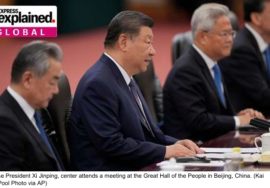
Chinese President Xi Jinping’s much anticipated visit to Washington from Sep 23-25 was significant, given the turbulent global environment and rivalry between the two global powers. It was Xi’s first visit to the White House in a decade, reciprocal to United States (US) President Donald Trump’s visit to Beijing in May this year. While high on symbolism, the summit was cautious on the outcomes. There has been temporary pause in the US–China confrontation, and the two sides have tried to maintain it to obviate possible confrontation.
The visit started on a striking note, with unmistakable optics. Trump broke the protocol as he chose to greet Xi on the tarmac at Joint Base Andrew, rather than the usual protocol of meeting at the White House. It was an unusual gesture; the message essentially conveyed was that of respect and reciprocity, with strong element of personal diplomacy.
Incidentally, when Trump last visited Beijing four months back, he was received by the Chinese Vice President Han Zheng. In the recent past, former Presidents Gorge W Bush and Barak Obama also made similar exceptions, when they received the Pope at the airport(1).
However, beneath the red carpet lay hard strategic reality as the US–China relations remain complex, characterised by geopolitical contestation, economic interdependence, technological competition, and military signalling. The trade tension is driven by dispute over tariffs, and unresolved issues like industrial overcapacity, technology control, and market access. Additionally, the problem lies with the trade imbalance, wherein China’s exports have surged, while the US continues to be concerned about supply chains and Beijing’s dominance of critical minerals. The Artificial Intelligence (AI) race is another dimension of the rivalry between the two, with both military and national security implications.
The ground for the Washington Summit had been laid during the meeting of the two leaders in Beijing in May this year where they had established ‘One-on-One’ communication channel and worked towards a more stable relationship. Washington is keen to have greater predictability on trade, critical minerals, and supply chains while Beijing’s interest lies in preserving market access and to avoid open ended tariff confrontation. Besides, the two leaders face domestic challenges—the US mid-term elections are due in Nov 2026 and China’s 21st Party Congress is slated for 2027 where Xi will be seeking unprecedented fourth term.
Salient Highlights of the Summit
The Washington Summit was held in conducive environment, but the revealing feature was difference in emphasis between the two readouts. Some of the key take aways were:
• Strategic Stability. The Chinese readout explicitly articulated strategic concept—‘Constructive China–US Strategic Stability’. During the meeting with Trump, Xi once again invoked ‘Thucydides Trap’ (ancient theory propounded by the Greek Philosopher Thucydides, which says that competition between rising power and status quo power leads to war, contextualised by Harvard Professor Graham Allison) as he did earlier during Beijing summit(2). Xi’s reference underscored how concerns about potential US–China military confrontation continue to impact the bilateral relations. Xi reiterated that both nations stand to gain from cooperation and lose from confrontation; he called for regular military dialogue and stronger crisis prevention mechanism(3).
Trump drew on the two-nations shared history as he recalled that during the World War II, both the militaries were allies against Japan. He emphasised on the potential of cooperation, which could accomplish much, by pursuing common interests(4).
• Trade Deal: Extension of Truce. As per the statement of Treasury Secretary Scott Bessent, the trade agreement signed last year, set to expire in Nov, has been extended by two months. The two countries agreed to USD 30 bn reciprocal tariff reduction under an eight-point consensus reached during the summit. It has been agreed to establish a ‘Board of Investment’ and engage in further discussions on the supply of critical minerals, besides continue working on supply chains to overcome the shortages in the critical minerals(5).
However, the deeper contradictions remain unresolved as US wants greater access to the Chinese markets while concurrently curtailing access to strategically sensitive technologies. China, on the other hand, seeks stable access to American markets and technology, whiles trying to reduce restrictions designed to constraint its technological ascent. In fact, trade diplomacy has become a mechanism for managing strategic competition rather than resolving it.
Case in point is the rare earth minerals, as it illustrates the changing character of rivalry. China’s position in processing rare earths wherein it controls 85-91 percent of the global refining capacity provides Beijing leverage, which Washington cannot neutralise any time soon(6). The hard reality is that economic interdependence has become a component of ‘Comprehensive National Power’. Hence, both the US and China are trying to preserve economic benefits and minimise strategic vulnerability.
• Artificial Intelligence: The New Strategic Frontier. Undoubtedly, AI has emerged as the new dimension of the US–China rivalry, ambit is rather wide. It encompasses economic productivity, military capability, intelligence, cyber, and technology. While neither is prepared to concede the technological leadership, both the US and China are cognizant that uncontrolled competition in advance AI entails high risk.
Trump has termed AI as ‘Super Intelligence’ (SI) during his recent address at the United Nations General Assembly and wants to leave it where it is. Xi, however, said that as leading nations in AI, the US and China had the capability and responsibility to manage its growth for good of the people. At the summit, it was decided to institute ‘US-China SI Dialogue’, with next exchange slated for Nov 2026(7). This arrangement may prove significant over a period to manage unintended escalation in view of the intense competition for AI supremacy.
• Taiwan-A Strategic Paradox. China considers Taiwan as an unfinished agenda of the 1949 Communist Revolution. Hence, Beijing regards Taiwan as the core sovereignty issue. Xi, as expected, raised the Taiwan issue and hoped that the US would ‘Handle Taiwan question with prudence and oppose its independence’. The US Indo-Pacific strategy places importance on maintaining stability across the Taiwan Strait. The American side maintained its traditional strategic ambiguity without altering long-standing formulation i.e., it does not ‘Support Taiwan’s Independence’.
• Global-Geopolitical Issues. Trump and Xi also discussed other international issues including Iran, Russia, and North Korea. Both sides agreed that Iran should not develop nuclear weapons and tolls cannot be imposed on international waters-such as the Strait of Hormuz. The Ukraine War was also discussed but there was no announcement on notable breakthrough. Regarding North Korea, there was no public policy announcement(8).
The emerging trend is one of the issue-specific cooperation between the two, in consonance with the national interests. In West Asia, Beijing’s key interests are stability of the region and uninterrupted energy flow, while Washington seeks Chinese indulgence in reigning proxies nurtured by Iran. Even on Ukraine and North Korea, the strategic interests of the two diverge significantly.
Key Takeaways: The Road Ahead
While no breakthrough was expected, the most important outcome was the decision to institutionalise the process of engagement. The two sides agreed to continue with the mechanism of dialogue to handle the economic issues including critical minerals and SI, besides creating AI-incident communication channel.
The summit did not make tangible progress on structural disputes over Taiwan, trade asymmetry, advance technology, industrial policy, shaping future global geopolitical architecture, and elimination of mutual distrust. The effort was to manage competition. The two leaders are set to meet again when they host each other at G20 (in Miami) and Asia Pacific Economic Cooperation (in Shenzhen) summits(9). This will enable Trump and Xi to continue with the engagement and prevent tactical disputes turning into strategic crisis.
However, repeated meetings do not guarantee stability. Much will depend on implementation of institutionalised mechanism to progress the contentious issues. The trajectory of summits, from Beijing to Washington, reveal emerging character of Trump–Xi diplomacy; managing strategic competition. For Washington, the real challenge is to extract substantial economic and security benefits without allowing transactional deals to obscure long-term strategic vulnerabilities. For Beijing, it is to secure predictable relations with the US without compromising on its global ambitions and core interests.
For the international polity, the stakes are high as the US–China relations increasingly constitute centralisation of global politics, tentamounting to de facto bipolar axis, characterised by personal diplomacy. Beyond the red carpet and warm handshakes, what will be crucial is the ability of Washington and Beijing to build durable guard rails to manage the intensifying rivalry.
Endnotes
1. News and Policies, “Event Backgrounder: The Visit of His Holiness Pope Benedict XVI to the White House”, The White House, Apr 2008, accessed 29 Oct 2026, https://georgewbushwhitehouse.archives.gov/news/releases/2008/04/20080411-10.html; AP, “President Obama Greets Pope Francis Upon Historic Arrival To United States”, CBS News, 22 Sep 2015, accessed 29 Oct 2026, https://www.cbsnews.com/newyork/news/obama-greets-pope-francis-us/
2. Robert Tait, “At Trump meeting, Xi Jinping lays out terms to avoid US-China military conflict”, The Guardian, 25 Sep 2026, accessed 29 Oct 2026, https://www.theguardian.com/us-news/2026/sep/24/xi-jinping-trump-china-cooperation-thucydides-trap
3. Ibid.
4. Fact Sheet, “President Donald J Trump Advances a Fair and Reciprocal Relationship with China While Hosting Historic State Visit”, The White House, 25 Sep 2026, accessed 29 Oct 2026, https://www.whitehouse.gov/fact-sheets/2026/09/fact-sheet-president-donald-j-trump-advances-a-fair-and-reciprocal-relationship-with-china-while-hosting-historic-state-visit/
5. Ibid
6. Kalpit A Mankikar and Amit Ranjan Alok, “‘Chokepoint Politics’: China’s Rare-Earth Statecraft and India’s Search for Strategic Autonomy”, Observer Research Foundation, 15 Jul 2026, accessed 29 Oct 2026, https://www.orfonline.org/research/-chokepoint-politics-china-s-rare-earth-statecraft-and-india-s-search-for-strategic-autonomy
7. Fact Sheet, “President Donald J Trump Advances a Fair and Reciprocal Relationship with China”.
8. Team Reuters, “Trump and Xi Agreed to support each other in hosting APEC and G20”, Reuters, 25 Sep 2026, accessed 29 Oct 2026, https://www.reuters.com/world/china/trump-xi-agreed-support-each-other-hosting-apec-g20-summits-xinhua-reports-2026-09-24/
9. Ibid.
About the Author
Major General GG Dwivedi, SM, VSM**, PhD (Retd) retired as Assistant Chief Integrated Defence Staff after 38 years of distinguished service in the Indian Army. A veteran of Bangladesh War, he subsequently commanded battalion in Siachen, a brigade in Kashmir Valley and division in the Northeast. He also served as Defence Attache to China, with concurrent accreditation to North Korea and Mongolia. An alumnus of National Defence College and Harvard Kennedy School, he holds PhD from Jawaharlal Nehru University. An acclaimed author, strategic affairs commentor, he regularly appears as a panellist on the National TV.