Xi Jinping eliminates every challenge to power
Recently, significant news emerged from China: Zhang Youxia, the country’s most senior general, a Politburo member and vice chairman of the Central Military Commission (CMC), the country’s highest defense body, and General Liu Zhenli, head of joint operations within the CMC, have been investigated. This has caused a stir in Chinese political and military circles and sparked a flurry of speculation among those closely monitoring China’s activities.
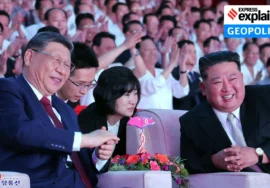
China’s entire administrative and military structure is unique. Countries around the world have armies, but in China, the military is commanded by the Communist Party. This system was implemented by Mao Zedong in 1928. He declared that the People’s Liberation Army (PLA) would be the armed wing of the Chinese Communist Party (CCP). This meant that the CCP would have complete control over the bayonets. The PLA and the CCP are umbilically linked, and these are the two pillars on which China’s entire political structure rests. Clearly, the Chairman of the CMC is the second most powerful official after the General Secretary of the CCP. Through these two positions, the Communist Party exercises power. The position of President is solely for political protocol. Currently, Xi Jinping holds all three positions.
When Xi Jinping took power as the fifth-generation leader of the Communist Party in 2012, he launched a campaign against corruption from the bottom up. This campaign has so far resulted in disciplinary action against more than 200,000 officials. The clear objective is to consolidate political control and eliminate potential rivals, ensuring absolute loyalty within the political and military structures.
Xi Jinping carried out unprecedented military reforms to transform the PLA into a modern force. Combat doctrines were constantly refined, and the army was reorganized and modernized, with annual double-digit increases in defense spending. Xi Jinping has strengthened his grip on the PLA by promoting only his loyalists to top positions. Under the guise of cleansing the CCP’s image and maintaining discipline, top military officers have been periodically removed. Initially, Mao removed several prominent generals, most notably Marshal Lin Biao and his successor and Defense Minister, General Peng Dehuai. Even Deng Xiaoping removed generals loyal to Mao, particularly the “Gang of Four.”
Since declaring himself president for life in 2019, Xi Jinping has removed dozens of senior generals and defense officials. The latest wave is underway through 2023. However, the investigation into Zhang Youxia, a veteran general and longtime associate of Xi Jinping, is surprising. The investigation into Zhang and Liu was announced last week via a 30- second video.
Following this, a PLA Daily editorial accused Zhang and Liu of severely undermining and undermining the system of supreme responsibility of the CMC chairman. This suggests that both had become a threat to Xi Jinping. Zhang is accused of accepting bribes in the promotion of officials and of leaking key technical data related to China’s nuclear weapons to the US.
Incidentally, Zhang, like Xi Jinping, is a “princeling,” meaning the son of a revolutionary whose relationship with Xi goes back a generation. Their fathers fought together in China’s civil war.
Clearly, corruption is deeply entrenched in China’s military, and there is widespread mismanagement at the top levels. Xi Jinping has likely realized that cleaning house will require purging an entire generation of leadership. The vacancies at several top levels in the CMC could hamper the PLA’s ability to maintain strategic planning, procurement, and continuity of command.
This could slow the pace of military modernization and impact preparations for potential complex operations in Taiwan. Xi is expected to fill key positions and assign important roles to younger, second-line officers loyal to him, bringing the command structure directly under his control.
This purge campaign will have political and strategic implications on the domestic front. It signals an unprecedented centralization of power, completely erasing the division between the party and the military. With Xi Jinping emerging as the “core” and assuming operational control himself, the collective leadership structure in both the Politburo and the CMC has weakened. This upheaval within the PLA’s upper echelons could embolden the Chinese leadership to become more aggressive internationally and to project power in tense areas such as Taiwan or maritime/land border disputes. Therefore, India must be wary of PLA plans along the Line of Actual Control.
Xi Jinping’s cleansing of the People’s Liberation Army is not limited to removing corrupt generals; it is part of a strategy to consolidate the Communist Party’s control over China’s powerful military. It also demonstrates Xi’s complete control over the party and the military, and his perceived invincibility. While radical changes at the top levels of the military may improve coordination, they could disrupt military preparedness, command, and institutional effectiveness, potentially impacting China’s future strategic position.
(These are the author’s own views)