China’s ‘two sessions’: Xi stamps his supremacy, sets course for third term
Leadership transition in the People’s Republic of China (PRC) takes place twice in a decade. It involves the party and the government. The Communist Party of China (CPC) held its 20th National Congress in October 2022, where its leadership for a five-year term was decided. The government functionaries are elected by the National People’s Congress (NPC). The first session of the 14th NPC was held in Beijing on March 5-12.
The ‘two-sessions’ framework
“Two sessions” is a collective term for the plenary sessions of the NPC and the Chinese People’s Political Consultative Conference (CPPCC), held concurrently at the Great Hall of People. It is an annual feature of high political significance. While the NPC is a rubber-stamp legislature body, Parliament, composed of around 3,000 selected delegates, the CPPCC is a political consultative and advisory entity. As the NPC meets only once in a year, a standing committee of some 175 hand-picked legislators works full-time to formalise the policy decisions.
This year, the ‘two sessions’ were highly consequential as a major leadership reshuffle was on the anvil. It was also the first meeting after 20th Party Congress, where Xi Jinping was reappointed to the posts of general secretary of the CPC and chairman of the Central Military Commission (CMC) for a record third time, the two most powerful positions. This enabled Xi to establish absolute control over the party, although he had to weather nationwide protests as a sequel to his zero-Covid policy.
Salient highlights
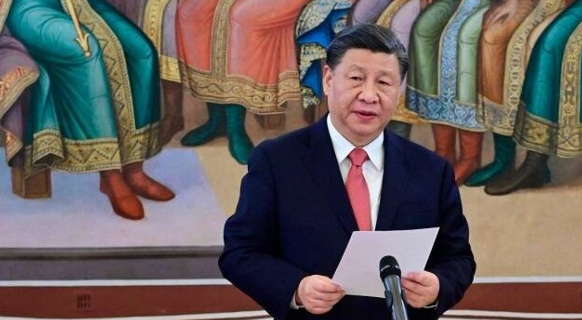
During the just concluded NPC, the most significant event was the re-election of Xi as President. In a carefully stage-managed show, Xi was formally handed the unprecedented third term when all the 2,952 delegates of the NPC unanimously voted in his favour. Xi had set the stage for this exception by amending the party constitution in 2018, doing away with the two-term norm for presidency.
The new leadership line-up primarily has Xi’s trusted loyalists. The six key members, all part of the apex Politburo Standing Committee (PSC) are: new prime minister Li Qiang, who is the closest confidant of Xi and a former Shanghai party chief known for pro-business views; Zhao Leji, Xi’s trusted head of the Central Commission for Discipline Inspection’ and a returnee of the previous PSC who has been made NPC chairman; Wang Huning, another holdover from the earlier PSC who has been appointed CPPCC chairman; Cai Qi, the Beijing party chief who now heads the party’s Central Secretariat; Ding Xuexiang, Xi’s former chief of staff who has been nominated as the first vice-premier; and Li Xi, erstwhile head of Guangdong province who has taken over from Zhao as head of the anti-corruption watchdog.
The other important cabinet officials include Qin Gang, Xi’s former protocol officer and later the Chinese ambassador to Washington. He succeeds Wang Yi (now member of Politburo and head of the party’s Central Foreign Affairs Commission) as foreign minister and is expected to follow in his predecessor’s footsteps. He could also be the special representative on Indo-China border talks.
Han Zheng, a former PSC member and vice-premier, has been appointed Vice-President, the role being largely ceremonial. General Li Shangfu, with a military modernisation background, was named the new defence minister. He Lifeng, a Xi associate, is one of the four new vice-premiers and will be in charge of economic policy.
Explained | Power play in Moscow: What China hopes to gain from Xi’s meeting with Putin
Yi Gang, governor of the People’s Bank of China and finance minister Liu Kun have been retained to ensure continuity, despite the two having reached the retirement age of 65. But they are no longer members of the Central Committee, the party’s elite decision-making body. Even Li Xiaoping, son of former prime minister Li Peng, has been reappointed transport minister but had to step down from the Central Committee.
Xi’s third term: agendas and ramifications
Having dispensed with the collective leadership model, Xi starts the third term with further concentration of power. The fine balance that existed between the party and the state is set to tilt in favour of the former with the ongoing organisational reforms and restructuring in the central government. It implies that the state organs and business entities are likely to witness increased party control. There are also hints of greater party intervention in the legal sector as well.
During the opening address, Xi highlighted the vision of “common prosperity” and high-quality development, the foremost task in building a modern socialist country. To rein in the financial sector, a National Financial Regulatory Commission and Securities Regulatory Commission are being established. With Xi laying emphasis on building self-reliance, a Central Science and Technology Commission is to be set up to make China a leading technology power. Security tops the agenda, as is evident from Xi’s closing speech, where he stated, “Security is the bedrock of development while stability is a prerequisite of prosperity. We must fully promote modernisation of national defence into a ‘great wall of steel’ that effectively safeguards national sovereignty, security and national interests”. Xi also highlighted “one country-two systems” and avoiding a “Taiwan split”. At a meeting with business leaders, Xi attributed China’s current economic troubles to western nations’ animosity and openly criticised the US. China’s current defence budget of $225 billion marks a rise of 7.2 per cent.
China is up against numerous challenges, as is evident from the work report presented by outgoing Prime Minister Li Keqiang, wherein he highlighted the economic headwinds of high unemployment (around 20 per cent in the 16-24 age bracket), sluggish consumption and a precipitous drop in revenue from land sale. Even the conservative economic growth target of 5 per cent may be hard to achieve. In the wake of repressive actions against private enterprises, there is little hope for the investments to return.
Xi begins his third term as an all-powerful leader, seen as Mao 2.0, riding the dragon solo amid tough times marked by internal uncertainties and an unpredictable international milieu. In pursuit of the “China dream” and rejuvenation, Xi envisions the PRC to “play an active part” in global governance. Hence the communist leadership is likely to be even more aggressive. Consequently, China is set to encounter an increasingly hostile world as its belligerence is bound to be staunchly contested. Xi will deftly endeavour to find ways by mending fences with some, simultaneously pitting “one barbarian against the other” (Chinese old strategy), while shoring up support back home by playing the nationalism card.
A war veteran, the writer has served as the defence attaché in China and North Korea and is a professor of strategic international studies.