Tawang clash: In China’s provocations, a grand strategy of strategic containment and settlement of disputes on its terms
Given its highly centralised structure and opaque system, China’s actions are always well planned and calibrated, especially with respect to the People’s Liberation Army (PLA), which is under the direct control of the Central Military Commission (CMC), headed by the president. Even activities that may appear tactical in nature have strategic connotations.
Therefore, the incursion by the Chinese troops in Tawang on December 9, resulting in a faceoff with Indian soldiers, could not have been a local action. This is evident from the pattern of past actions.
As per the defence minister’s statement in Parliament on December 13, the Indian Army firmly resisted an attempt by China to unilaterally change the status quo on the Line of Actual Control. (LAC) in Yangtse area-Tawang Sector. In the scuffle during the faceoff, our army, with great bravery, forced the PLA to return to its post. The minister added that some soldiers on both sides sustained injuries during the clash. On December 11, the local commander held a meeting with his Chinese counterpart.
From the operational perspective, the PLA’s transgressions on the LAC are in keeping with its “nibble and negotiate” tactics. Ever since President Xi Jinping came to power in 2012, the Chinese military has adopted a rather aggressive approach. Cases in point are: Depsang in April 2013, Chumar in October 2014, Doklam in July-August 2017 and Eastern Ladakh in May 2020.
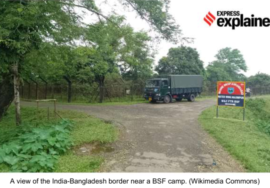
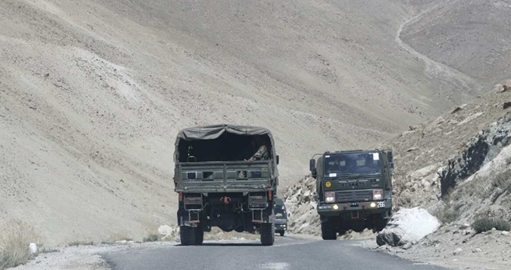
The Yangtse area, at an altitude of 17,000 feet, is of immense tactical importance. It has been repeatedly targeted by the Chinese to dislodge the Indian troops from their positions. It also happens to be one of the numerous disputed locations. Here, the Indian and Chinese have posts located on either of the nullah, around 1,000 metres apart, with India having the advantage of being on the dominating heights. The area is patrolled by both sides up to the respective claim lines. Earlier, in 2016 as also last year, the Chinese had resorted to transgressions in this area.
The recent action by the PLA at Yangtse was quite similar to that of Galwan-Eastern Ladakh in June 2020. From the available inputs, the PLA soldiers numbering over 300, armed with bats and batons intruded surreptitiously on the night of December 8-9, taking advantage of bad weather and rugged terrain. The aim was to secure the Yanki outpost. Indian troops responded quickly with reinforcements coming from the main position. A hand-to-hand scuffle ensued, which possibly lasted for a few hours. The two sides disengaged when the Chinese troops were forced to retreat to their location.
The Chinese had been preparing for such an action for some time. Just before the 20th Party Congress held in the third week of October in Beijing, the PLA had moved additional troops into areas facing Sikkim and Arunachal Pradesh, including three combined brigades. The PLA had also launched drones for surveillance but they were ineffective due to the timely action by our air force.
As usual, the PLA has been quick to blame India for the clash. As per the statement of Colonel Long Shaohua, spokesperson of Western Theatre Command (WTC), “Chinese military was conducting a regular patrol in the Dongzhang area on the Chinese side of the LAC when they were blocked by the Indian Army. Our troops’ response was professional and firm, which helped to stabilise the situation. Both sides have been under disengagement since then.” This is the PLA’s “Three Warfare” approach, part of “Grey Zone Warfare”, which encompasses public opinion warfare, psychological warfare and legal warfare.
Since the aggression in Eastern Ladakh in 2020, many salient developments have taken place across the Chinese side of LAC opposite Arunachal Pradesh. Alongside massive infrastructure development, the PLA has been strengthening its posture by moving troops closer to the LAC. During his visit to Lhasa in July last year, Xi had given directions to the military to make Tibet a formidable shield.
The amended “Chinese Defence Law”, which came into force in January 2021, empowers the state to mobilise manpower and resources to counter any threat to national security. It also facilitates greater “civil-military fusion”, facilitating the dual use of resources. One of the key initiatives is the creation of 640 model villages in Tibet. Around a third of these villages will be located closer to the LAC and will act as border outposts. China’s new border law came into effect this January and seeks to legalise the PLA’s incursions and transgressions by setting up boundary pillars. Beijing has named 15 places in Arunachal Pradesh, which it deems to be South Tibet (Zang Nan).
The crux of China’s India policy has been strategic containment and settlement of disputes on its terms. Beijing has succeeded in de-linking the boundary dispute from the bilateral relations, evident from the all-time-high trade figures and trade surplus in its favour. India’s China policy has been dictated more by expediency rather than long-term vision.
Consequently, this has worked to India’s disadvantage, often yielding ground in the hope of political settlement, which has not come about. Given its global aspirations, China’s strategic outlook has undergone a radical shift, marked by coercive diplomacy. Beijing’s aggressive stance towards Delhi is primarily due to the glaring power differential and perception of India as a soft state. Hence, any tangible change in the situation on the LAC is unlikely, since it suits China to keep the border issue alive to keep India under pressure.
Hence, India needs to evolve a pragmatic China policy based on the ground realities. While the armed forces must continue to scale up their preparedness and act firmly, the political leadership ought to be audacious in intent to engage with China on equal terms, as there can be no compromise on national sovereignty and integrity.
The writer, a retired army officer, commanded units and formations on the LoC/LAC. He is currently professor, Strategic and International Relations, United Services Institution of India